The Brainwill Laboratory
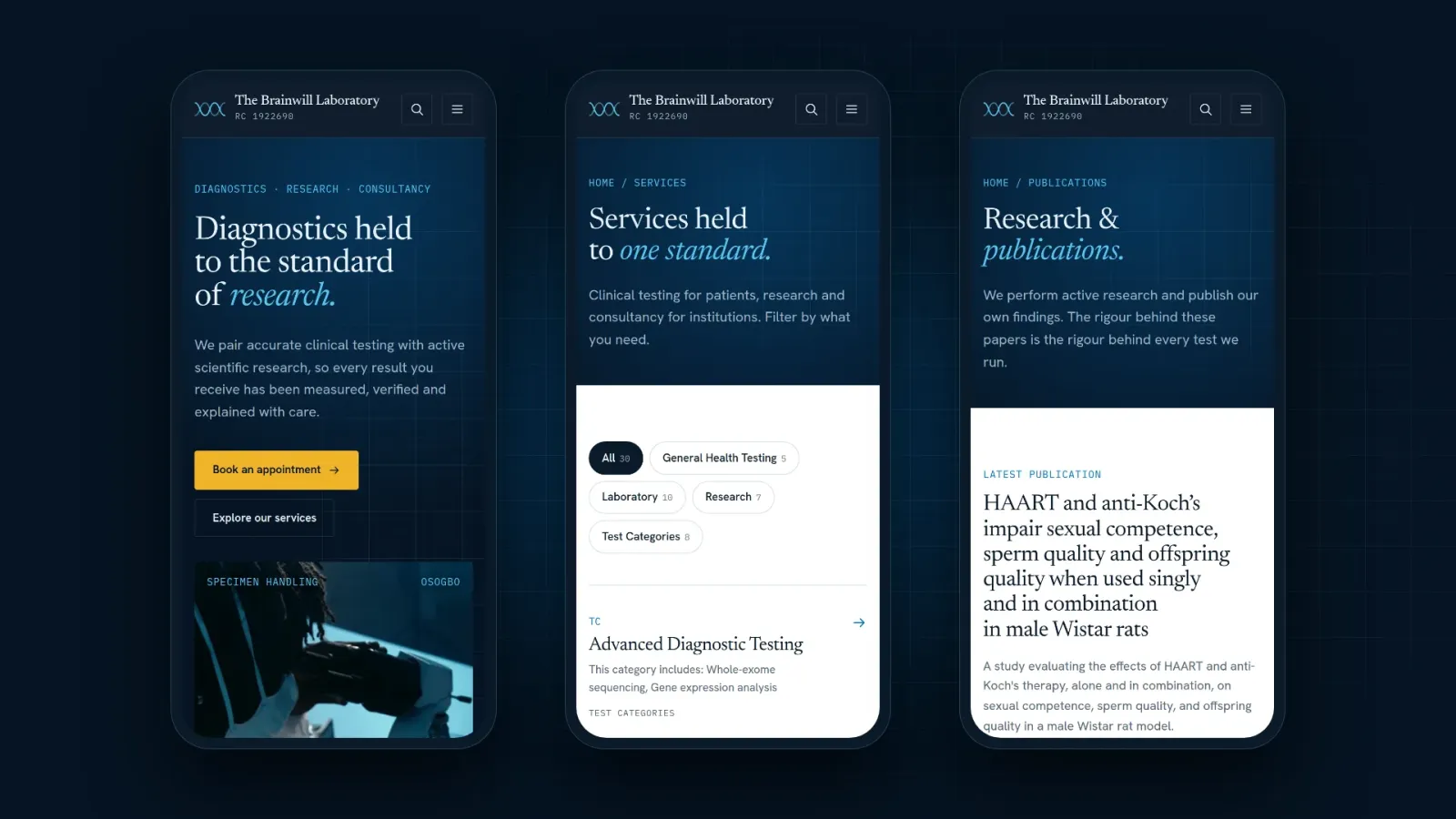
thebrainwilllaboratory.comThe Brainwill Laboratory runs clinical diagnostics and publishes its own research. The site had to make both visible at once: a patient booking a blood panel and a clinician checking the lab's papers should land on the same standard of evidence. The result is a hand-built WordPress theme where services, publications, team and bookings are each their own content type, and nothing on the page is filler.
Built with
The Outcome
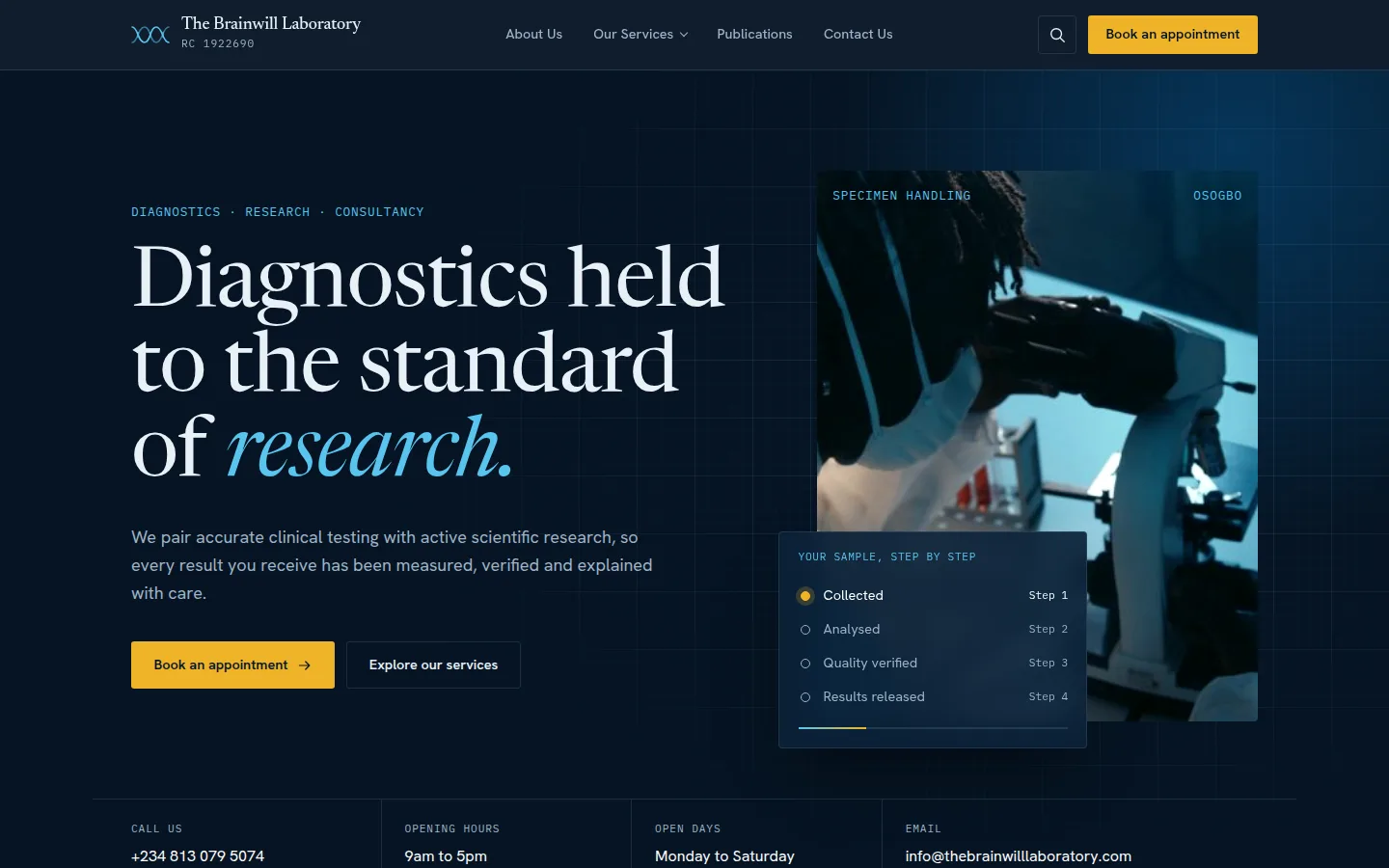
The lab now has a site where booking and research sit side by side instead of competing: a patient can go from the homepage to a requested appointment in three short steps, and the same visit shows the lab's published papers in a journal-style index. Bookings land in WordPress as private, trackable records with a clear status, rather than as loose emails, and the lab's staff update services and publications themselves without touching code.
Appointment requests arrive as private, status-tracked records after passing a nonce, honeypot, time-trap and rate limit, with a no-JavaScript fallback.
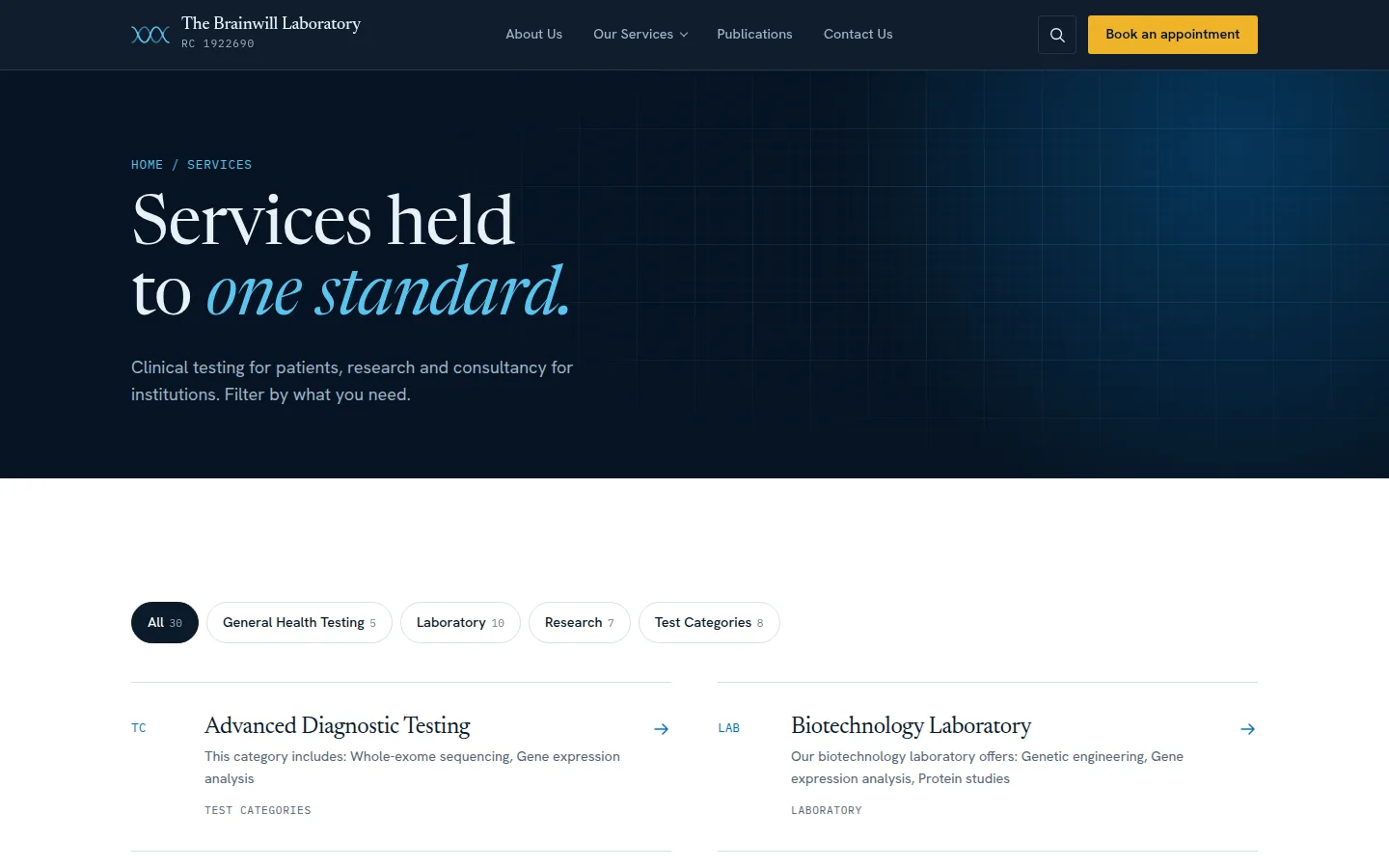
30 diagnostic, research and consultancy services organised into filterable categories, all edited by the lab in WordPress.
No placeholder staff, testimonials or citations ever reach the page: those sections stay hidden until real entries exist.
The Context
- Two audiences, one credibility problem. Patients arrive to book a test; referring clinicians and research collaborators arrive to judge whether the lab is serious. A generic clinic template serves the first and ignores the second, and research treated as an afterthought undercuts the lab's actual differentiator.
- Booking is the conversion, and it has to survive the real internet. An open appointment form on a public site attracts spam, repeat submissions and bots, and it has to work on patchy mobile connections where JavaScript may not load at all.
- This is a real medical business. Staff names, credentials, citations and testimonials cannot be invented to make a page look full. The site had to look complete on launch day while only showing what the lab could stand behind.
The Execution
- A design system drawn from the lab itself. A counting-chamber grid behind dark page heroes, monospace specimen-label captions for categories and steps, and an editorial serif that reads like a journal. The client chose it from a clickable prototype over two earlier directions, and it is documented in the theme so every template follows the same rules.
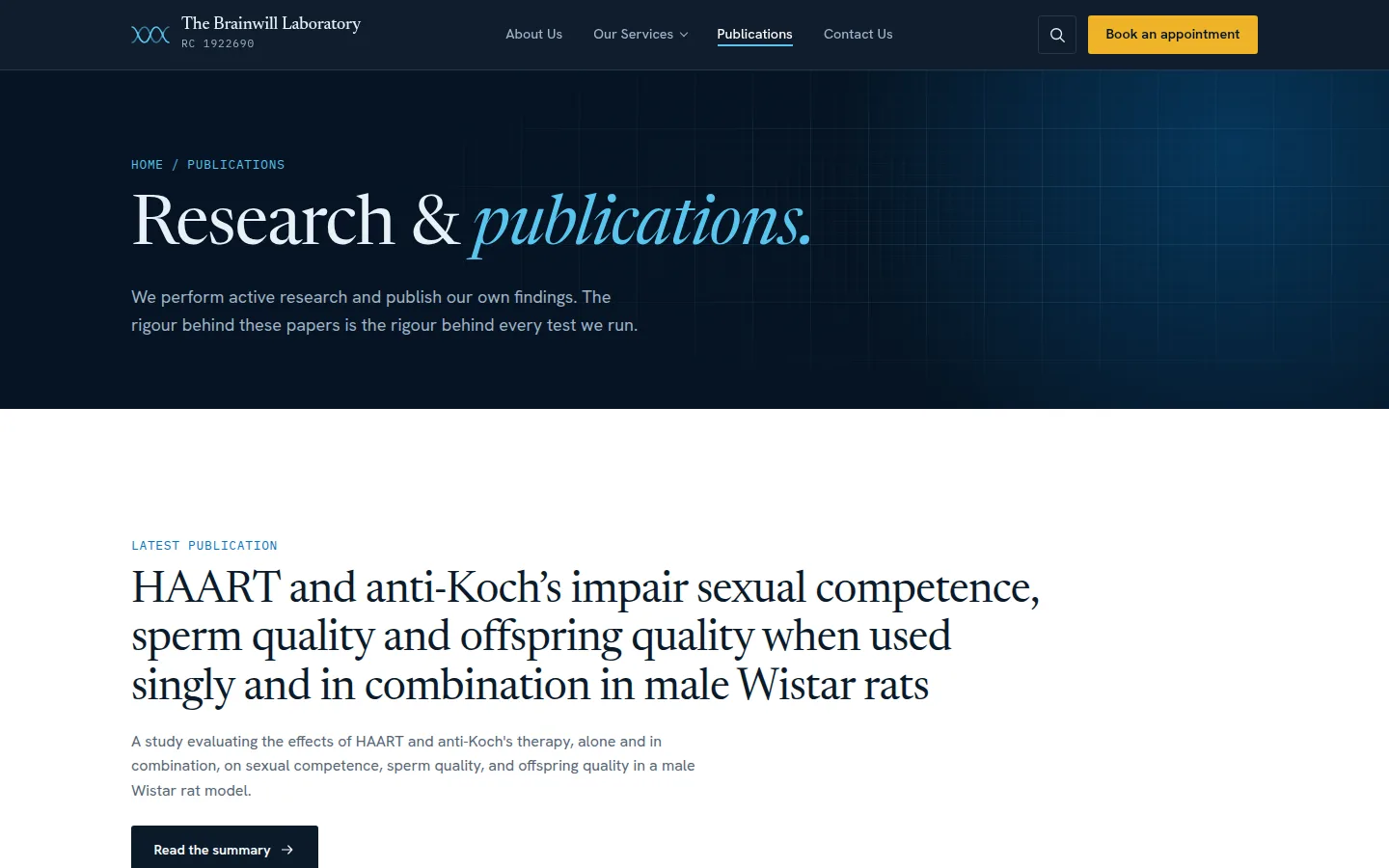
- Content modelled as the lab actually works. Services (grouped into categories and filterable), publications, team members and testimonials are separate custom post types, so the homepage, the services index and the journal-style publications list are all driven by real records the lab edits in WordPress.
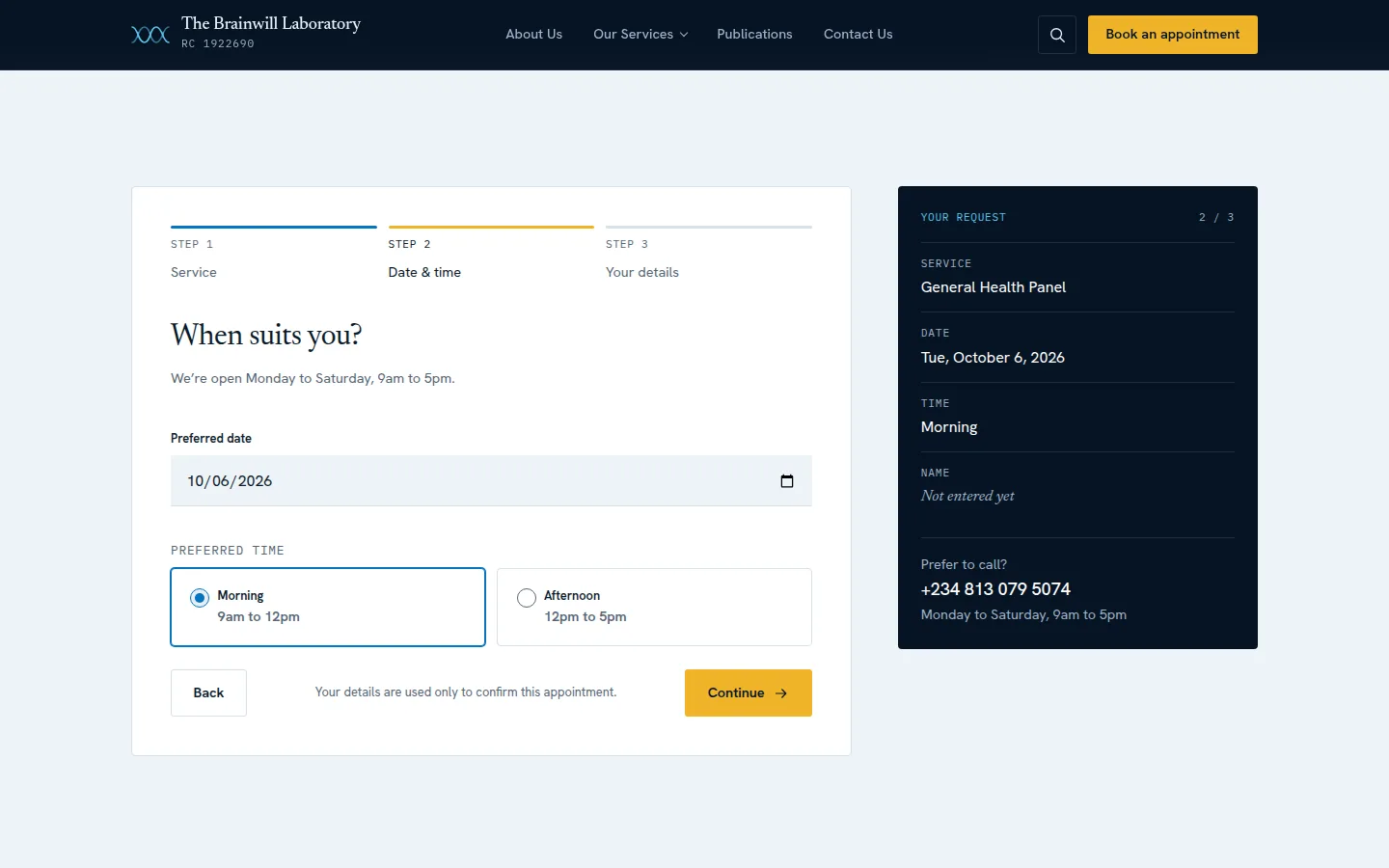
- A booking wizard that degrades to a plain form. Three steps (service, date and time, details) with a live summary panel alongside. Without JavaScript it is one ordinary form. Server-side, every submission passes a nonce check, a honeypot, a minimum fill-time trap and an IP rate limit before it is stored.
- Appointments as private records, not emails. Each booking is saved as a non-public appointment post with its own workflow statuses (pending, confirmed, completed, cancelled) and administrator-only capabilities, then a confirmation email goes out. A daily job flags old completed or cancelled appointments for review; it never deletes patient data on its own.
- Hidden until real. Team, testimonial and publication sections render only once a real entry is published, so the site never shows placeholder people or papers.
- Findable by search engines and answer engines. Structured data for services, publications, team members and breadcrumbs is layered onto the SEO plugin's output, and the theme serves an
/llms.txtsummary of services, publications and contact details generated from live content.